

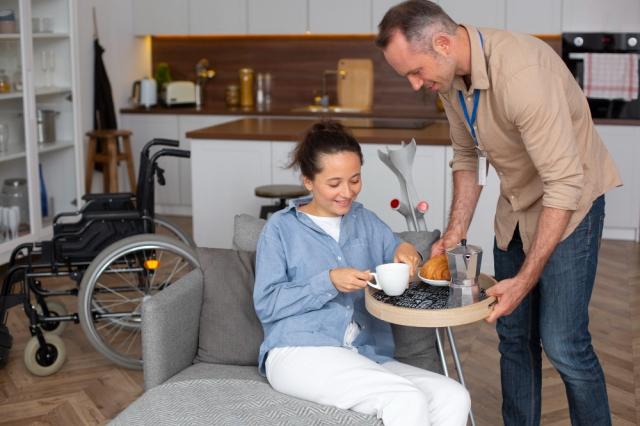
When people hear about NDIS Short-Term Accommodation, many think it's just about staying somewhere else for a while. Like a short holiday, maybe a hotel-type place. But that's not it. It's closer to a support option, a way to give both the person with disability and their carers some breathing room. It can mean a couple of nights, sometimes up to two weeks. During that time, the participant is looked after meals, personal care, activities, outings and the family gets to step back without worrying. It sounds simple, but the way you qualify for it under the National Disability Insurance Scheme isn't as simple as ticking a box. It's about proving need, about showing the benefit, and about connecting it all back to your plan.
What Short-Term Accommodation Is Meant For
The NDIS defines it in their guidelines: a short stay away from the usual home, with support included. It usually covers accommodation, meals, personal care, and participation in activities. That might mean going out with peers, doing group programs, sometimes even things like music and art therapy depending on the provider.
The larger point, however, is this: it is designed to keep life in balance. To carers it is rest time, recharge time. To participants, it is an opportunity to do something different, to exercise independence, to socialise. It is not a hospital, it is not a light vacation. It is somewhere in between.
It is during these brief stays that some participants find new skills. Such as learning to participate in group activities, as well as handling day-to-day tasks with decreased assistance. And families complain, without pause, they would burn out. This is why it is in the scheme in which it supports both sides.
The Question the NDIS Always Asks
How do they decide if you get it? They use the same phrase you see across the scheme: is it reasonable and necessary? That's the test.
They look at:
- Does STA help you reach your goals in your plan?
- Could the support be covered another way, maybe Core Support or informal care at home?
- Is it good value for money?
- Does it help prevent bigger issues, like carer breakdown, isolation, or health decline?
It's not about whether it would be nice, it's whether it fits the plan outcomes.
Why Evidence Matters
Saying “we need a break” doesn't usually get you there. The NDIS looks for proof. That proof might come from professionals who work with you, from your support coordinator, from carers who explain their situation.
Examples:
- An occupational therapist writes that a participant needs STA to build independence in daily tasks.
- A psychologist showing that respite reduces stress or improves mental health.
- A GP confirms that carers are struggling and without a break they risk their own health.
- A support coordinator documenting gaps between what current supports cover and what STA provides.
The stronger and clearer the evidence, the stronger the case. It shows that STA is part of home and living support, not an add-on.
When It Makes Sense
STA isn't for everyone. If you've got strong family support and enough Core Supports to cover needs at home, the NDIS may not see it as necessary.
But it does make sense when:
- carers are stretched thin and need structured breaks
- the participant needs to practise independence before moving to Supported Independent Living
- someone is isolated socially and needs group or community participation opportunities
It is also applied as a stepping stone at times. An opportunity to test out living arrangements, or to provide a participant with confidence to manage overnight support prior to transitioning into a longer-term option.
How It Differs From Other Home and Living Supports
People often confuse STA with SIL (Supported Independent Living) or ILO (Individualised Living Options). The difference is time and purpose.
- STA: short stays, usually up to 14 days, meals, care, activities included.
- SIL: long-term daily support in a shared home.
- ILO: tailored living arrangements, built to suit a person's preferences and lifestyle.
When applying, being clear about why you're asking for STA and not SIL or ILO, helps a lot. The NDIS wants to see you've chosen the right category.
How To Bring It Into Your Plan
The request usually comes up at a planning meeting or a review. That's when you (or your support coordinator) explain why STA is needed. The way you frame it matters. Not “I want a break” but “STA helps me achieve this outcome.”
For example:
- “I want to build social skills through group activities during respite.”
- “My family needs regular breaks to stay healthy enough to keep caring for me.”
- “I need to practise independence in a safe space before moving towards SIL.”
Those kinds of statements show outcomes. They make the case stronger.
What's Usually Included
If approved, funding for STA generally covers:
- Accommodation itself for the period
- Personal care supports (daily hygiene, meals, medication)
- Food and meal prep
- Activities that encourage independence, community participation, or therapy
- Access to support workers trained for your needs
Sometimes transport is included, depending on the provider.
Why Carers Value STA
It can be the distinction between survival and burnout. It can be overwhelming to take care of a person on a full-time basis. Carers put their own health at risk, when they do not take breaks, and then everybody suffers. STA provides them with air to breathe, as they know that their beloved one is safe and taken care of.
It is more than a break to participants. It is a new environment, a means of practising independence, a test of living independent of home, introducing oneself to social life. One may enter the room anxious and leave more confident. After a stay, small yet significant changes are commonly identified by families.
Why It's Not Funded for Everyone
The NDIS doesn't approve Short-Term Accommodation just because it's requested. If the needs can be covered with other supports, or if there's no clear link to plan goals, it may not be funded. It depends on individual circumstances.
That's why preparation is key. Clear evidence, linking it to outcomes, showing why it's necessary. Without that, the chances are lower.
Pulling It All Together
Qualifying for NDIS Short-Term Accommodation is about showing need, backing it with evidence, and connecting it to your plan outcomes. You qualify when it's the best way to support your goals and your carers. You don't qualify if it's just about a break without that link.
It varies with everyone. STA is a stepping stone to independence to some. To others it is the relief that keeps families going. Either way, it is a matter of balance. It helps the participants, helps the carers, and establishes a future stability.